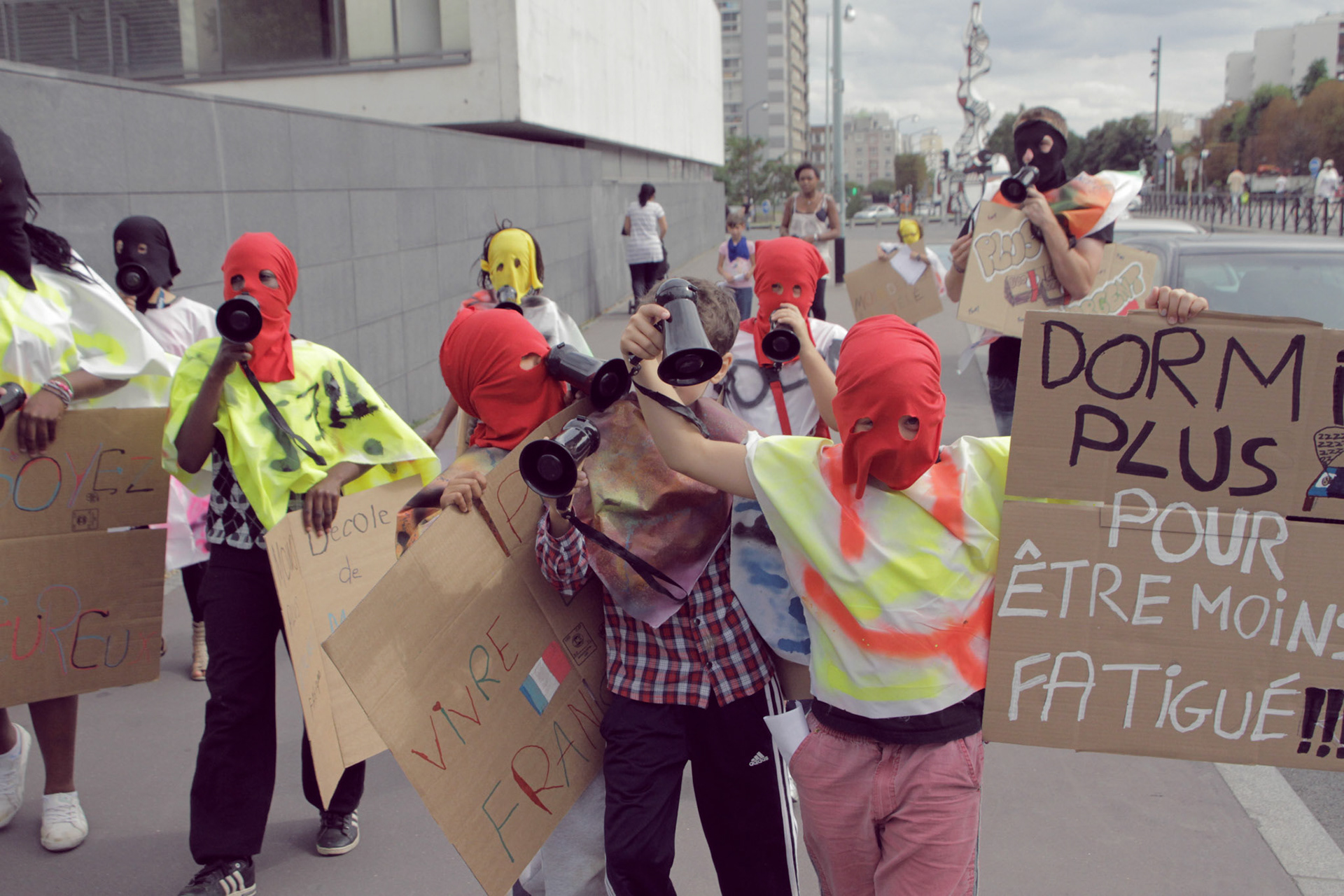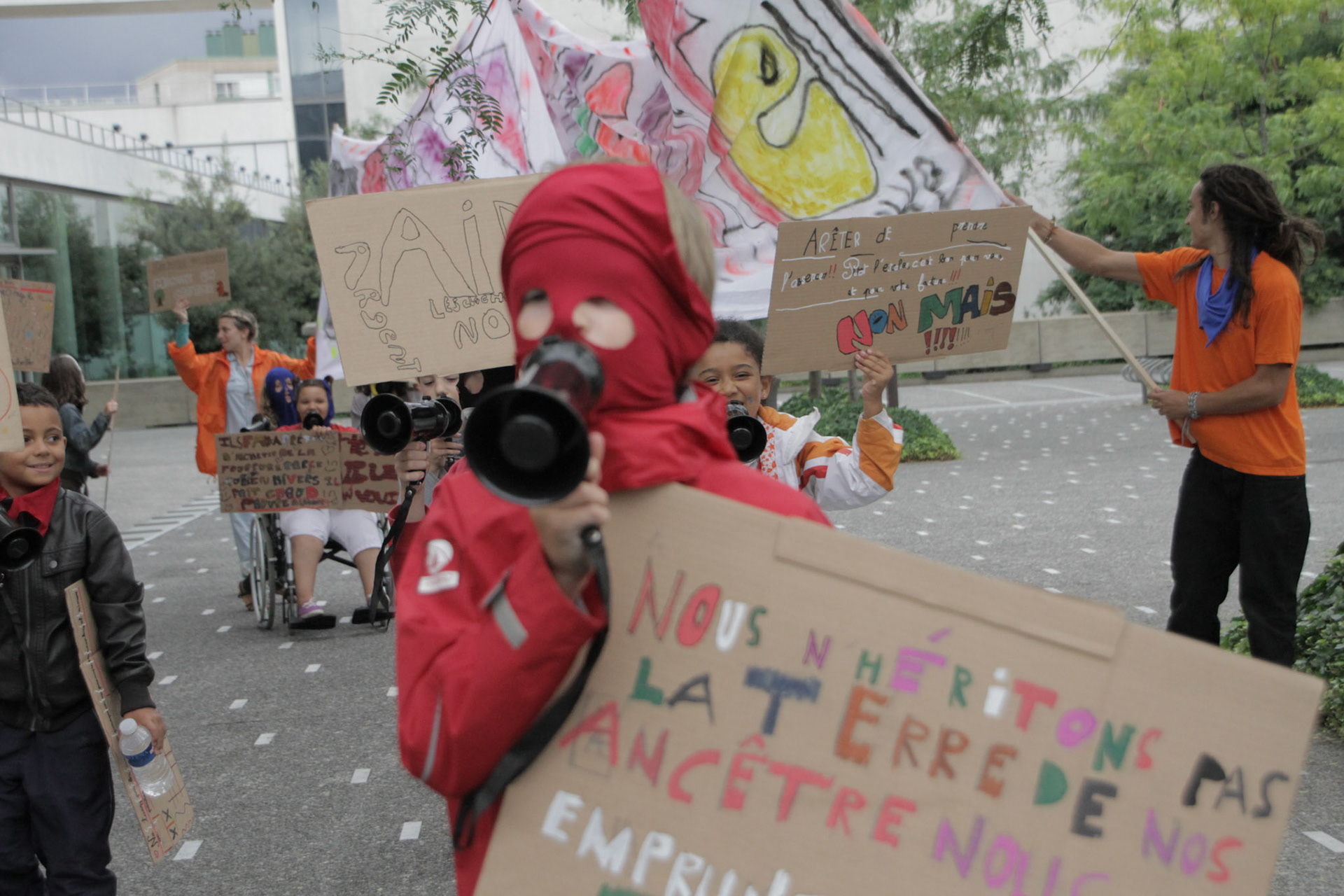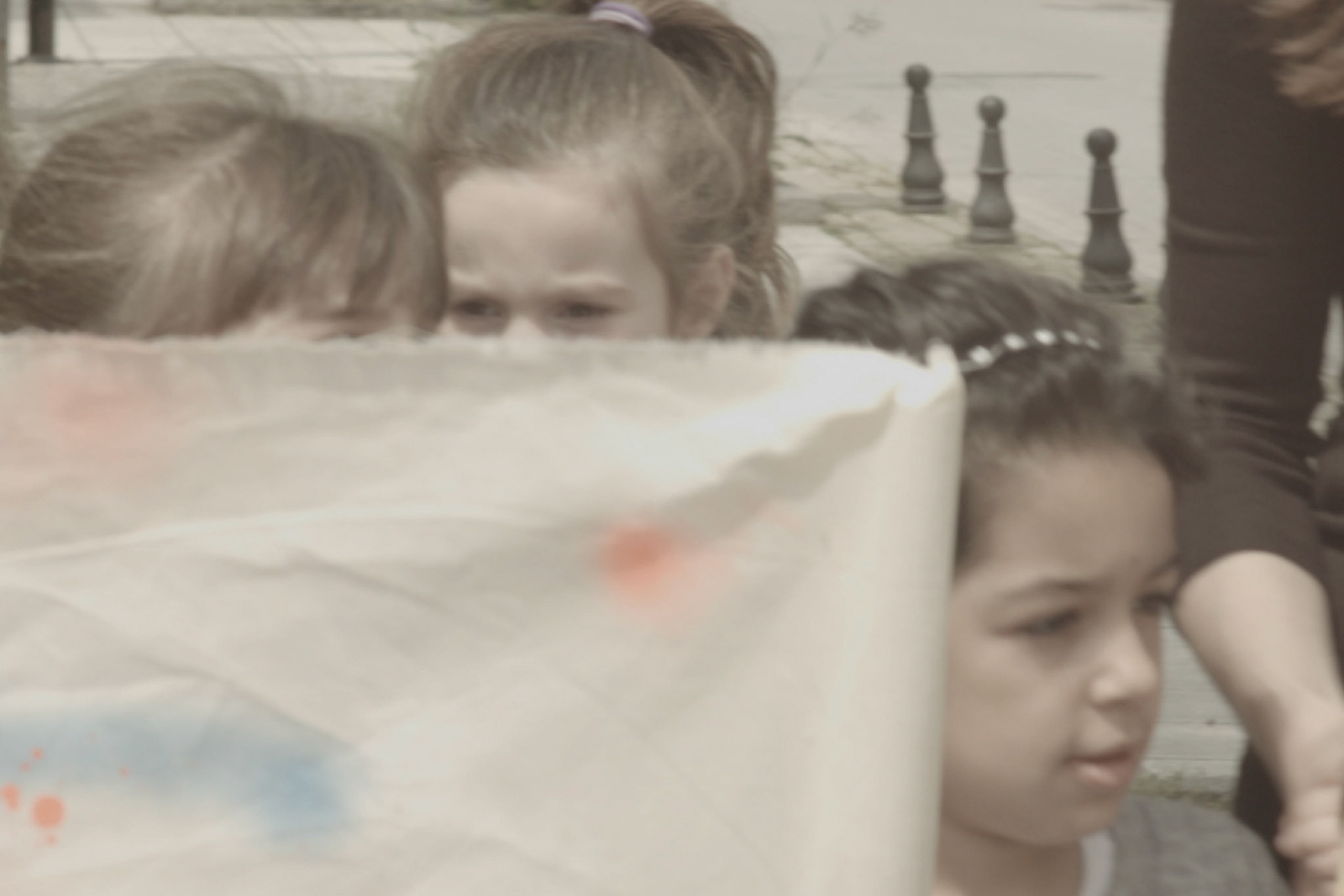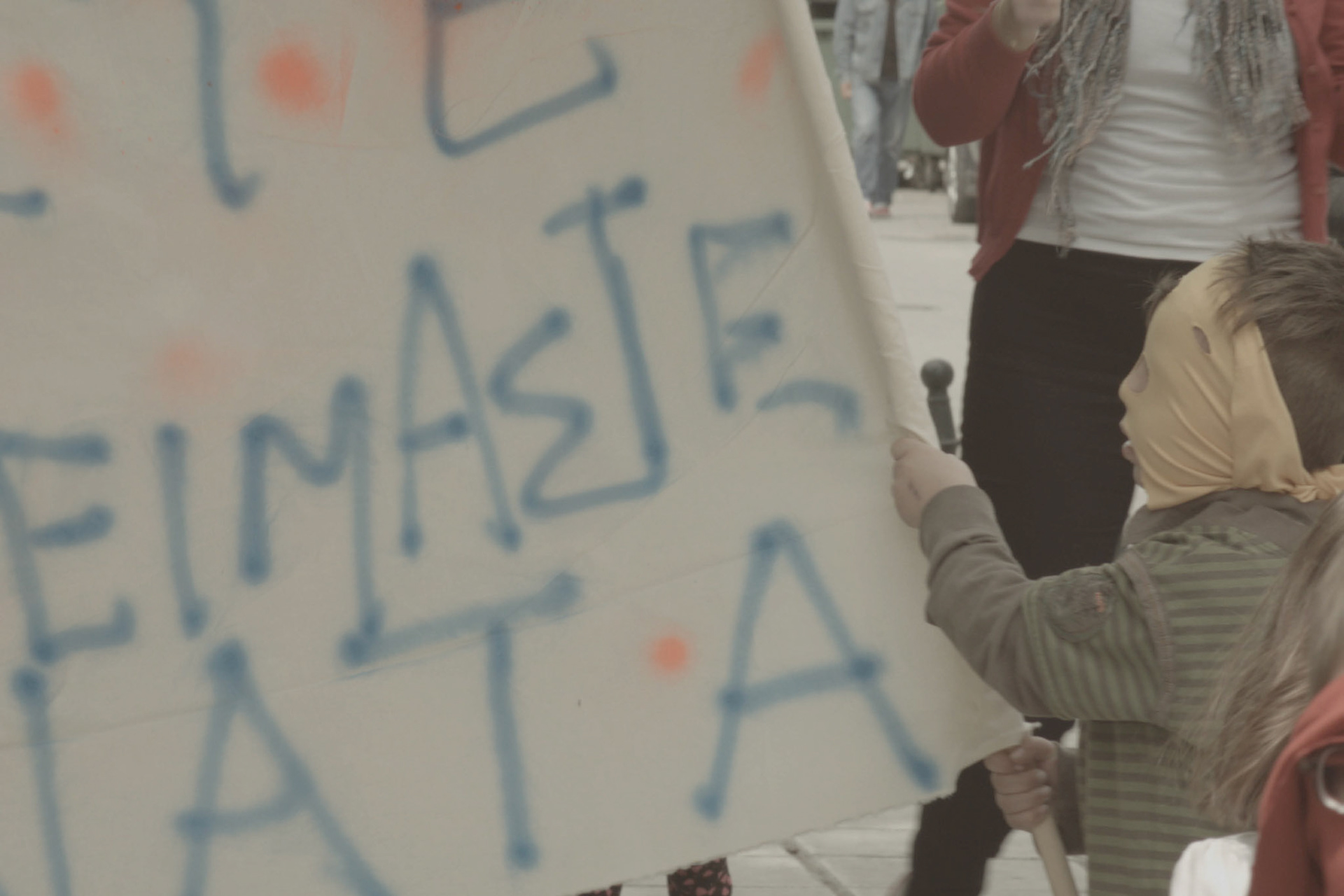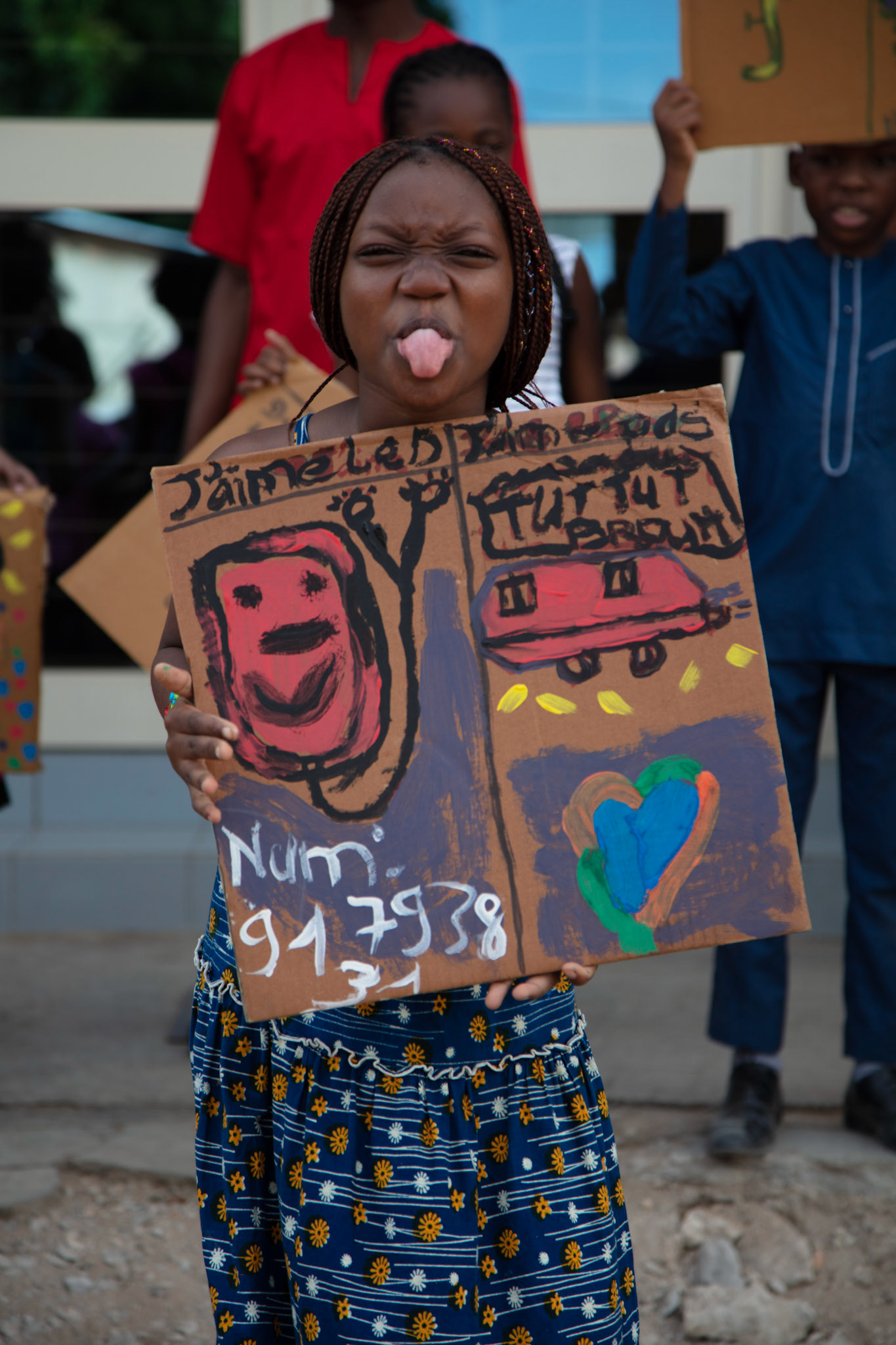
To experience this installation is to witness and participate in diverse moments of collective action staged by children in collaboration with Iván Argote in various international settings since 2011. Through their movements throughout the space, visitors restore kinetic energy to a scene that is populated with oversized photographic reproductions of individual participants suspended from the ceiling. It is precisely this alteration of scale that foregrounds the crux of Argote’s project: a desire to cultivate and amplify the collective voices of some of our youngest citizens.
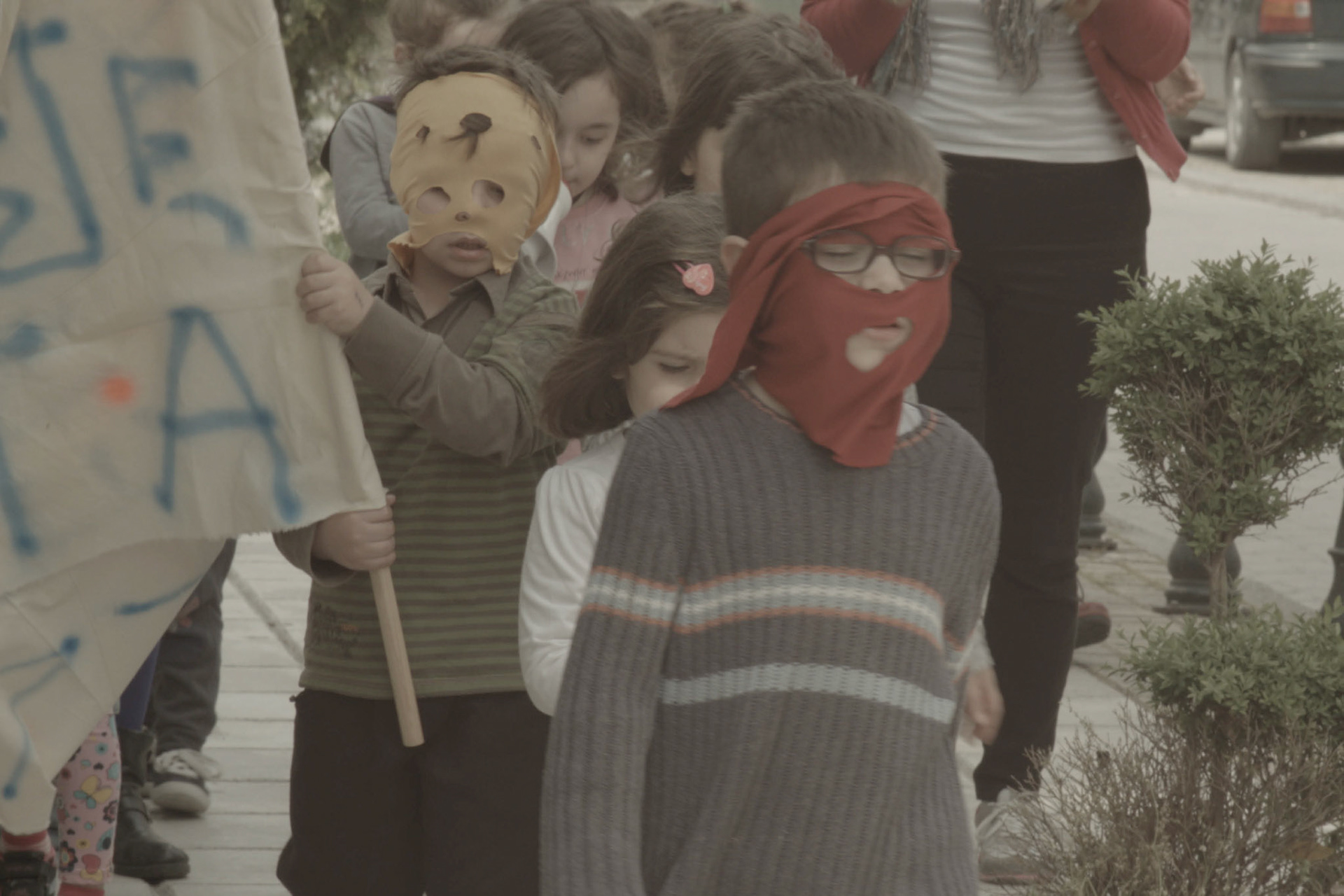
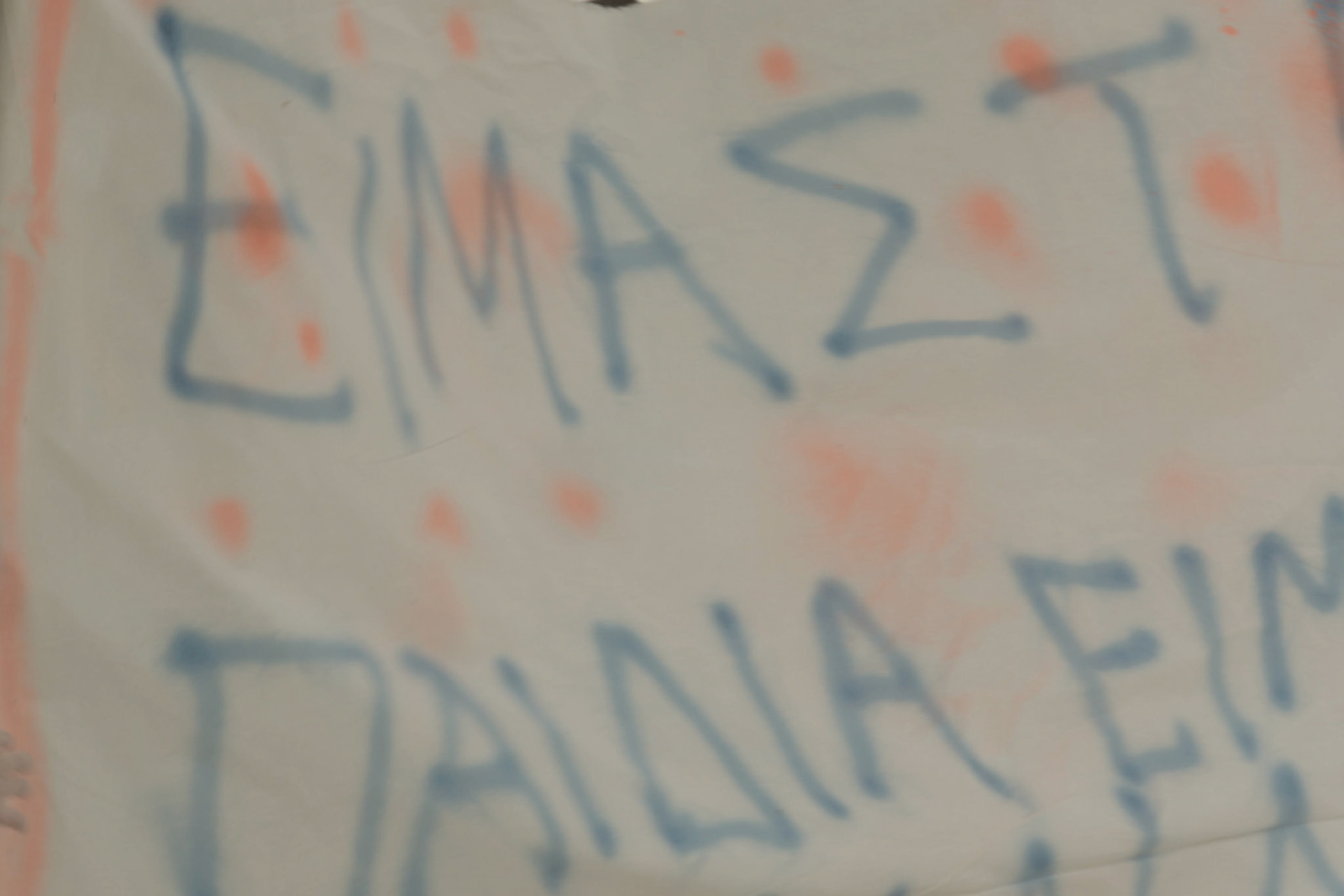
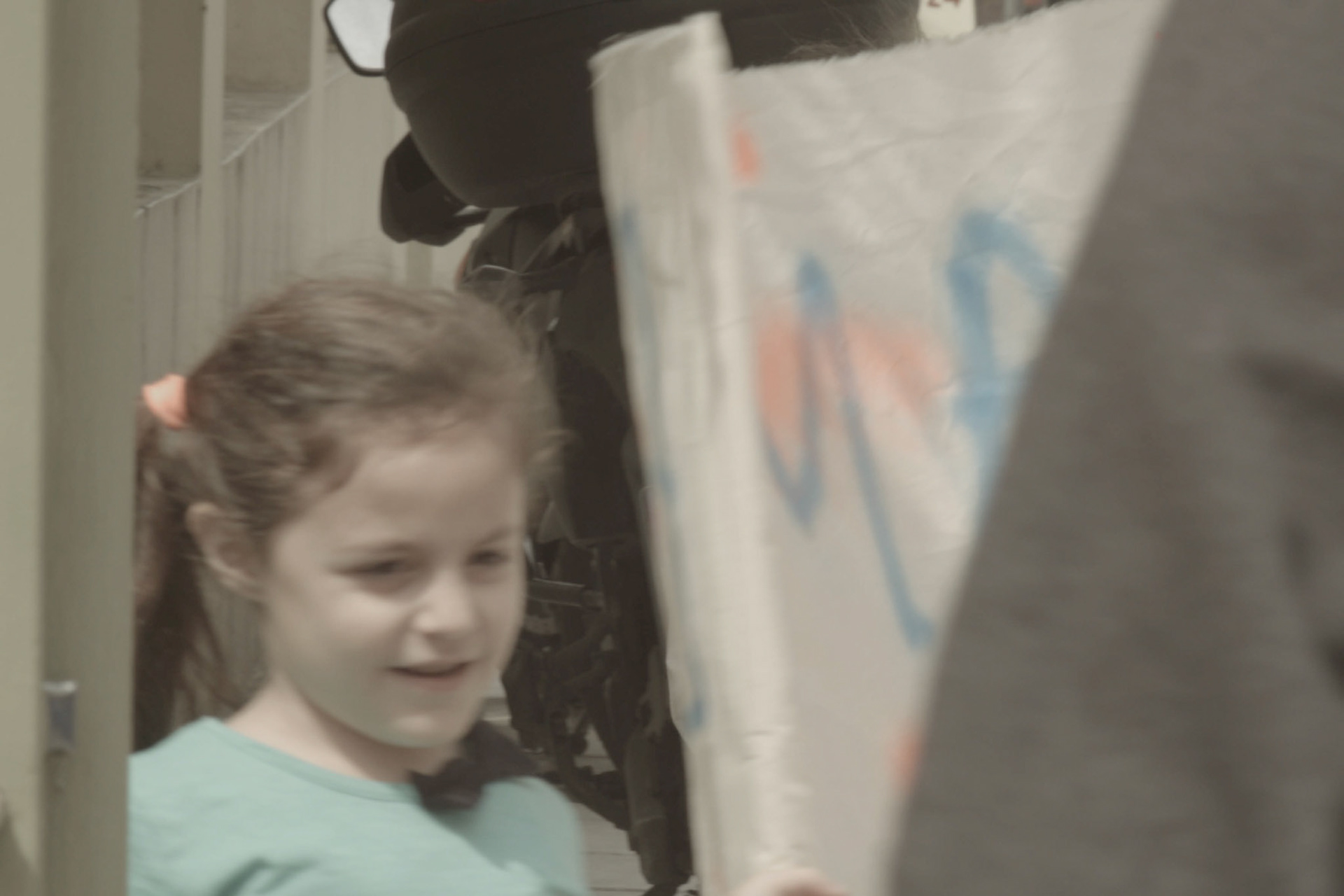
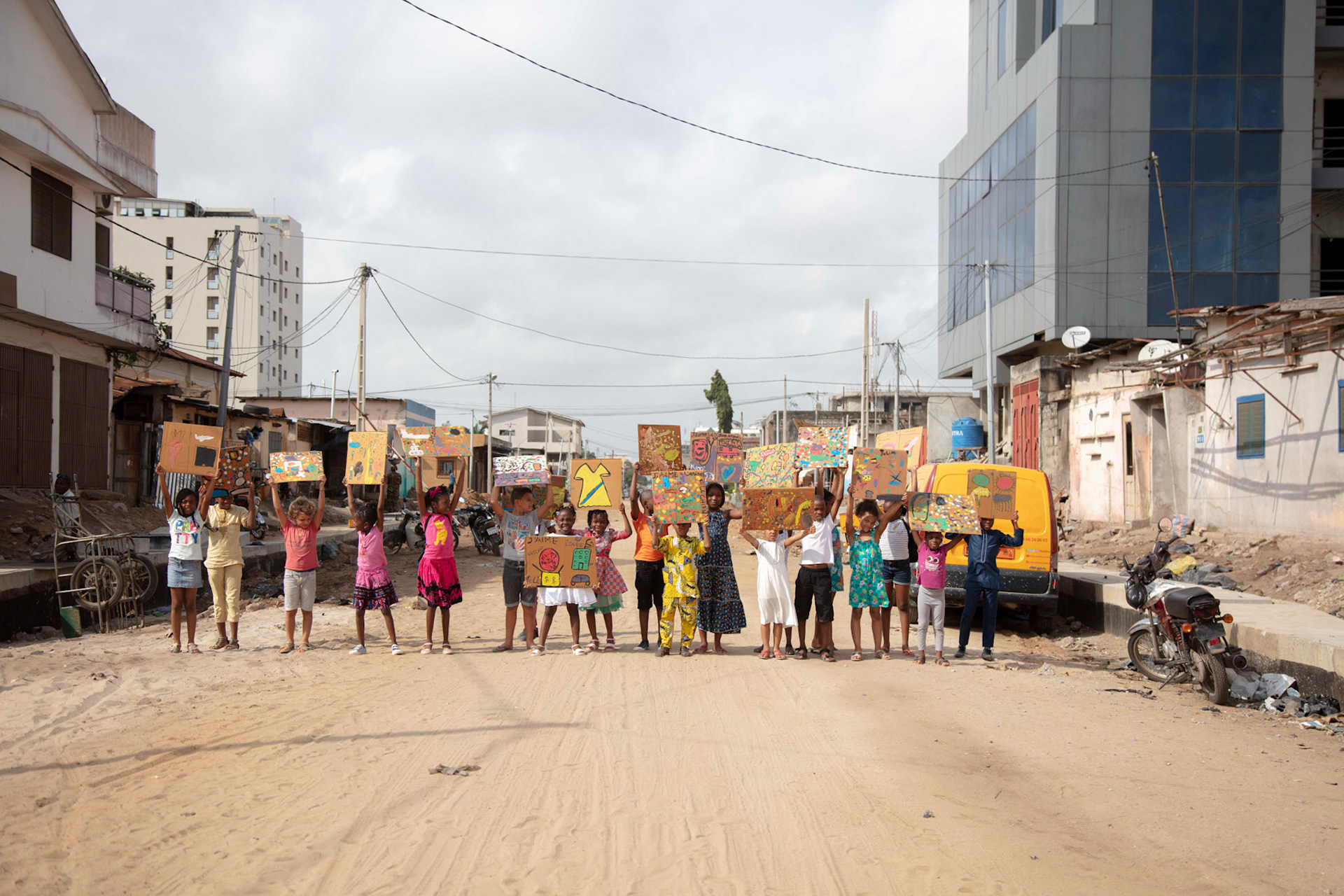
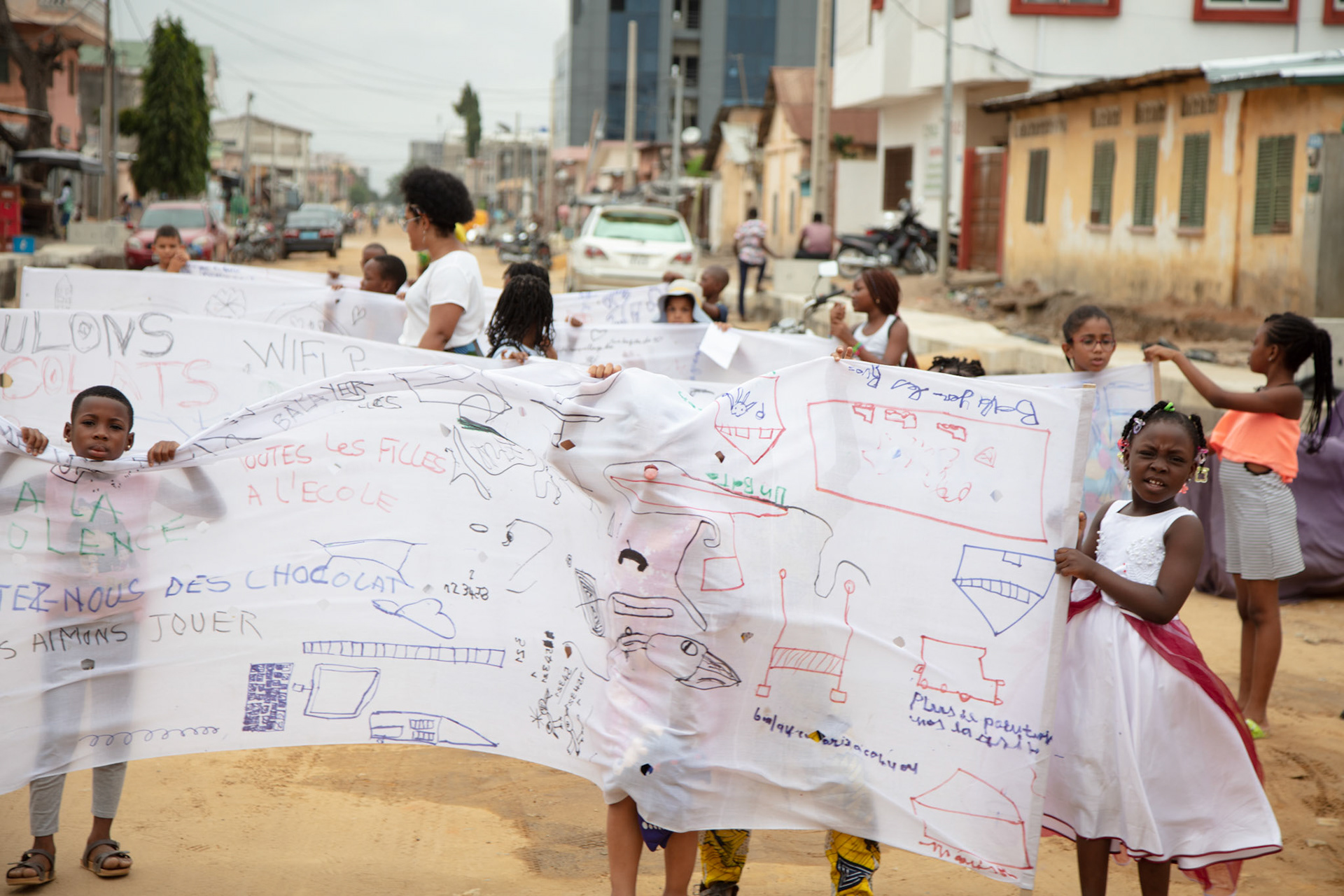
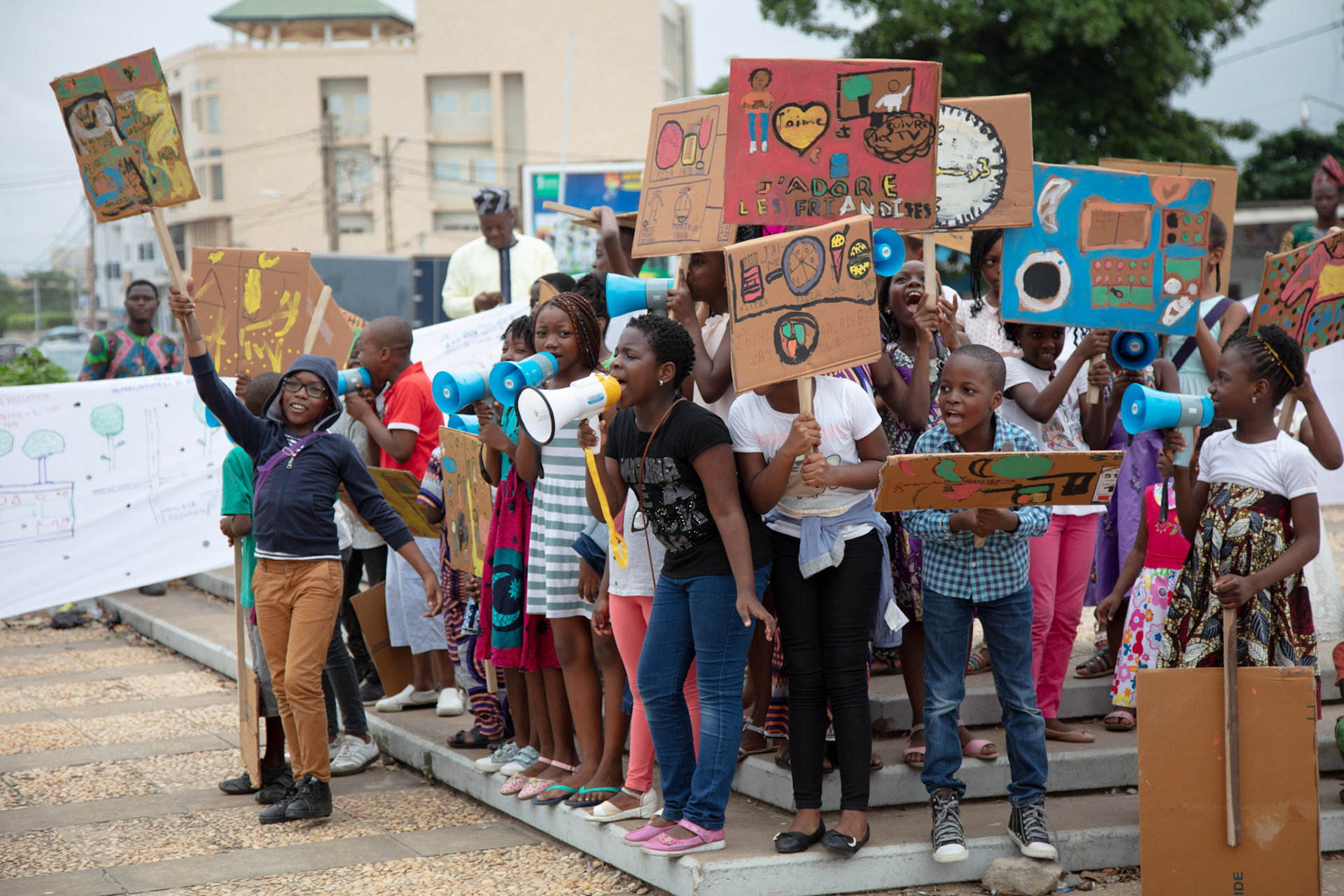
To that end, Argote has been collaborating with cultural and pedagogical institutions around the world to organize workshops for children ages 4-8 aimed at developing the skill of peaceful protest—a bedrock activity of democratic civil society. While idea for the project originated after the artist found a photograph of his father, a former educator, leading a protest with school-aged children in Bogotá in the 1970s, Argote reconfigures the hierarchy expressed in the family memento. Rather than directing the children on how and what to protest, Argote facilitates discussions amongst groups of about 20 participants so that ideas and slogans emerge organically. Once priorities have been established—ranging from the serious to the silly—the children work on creating their own placards and banners. Finally, the group brings their protest into the outside world, marching in the streets with megaphones amongst passersby.
In seeking to harness the innate creativity and joyful curiosity of children, Argote’s project resonates with the work of earlier artists similarly drawn to the unmediated spontaneity of childhood such as Paul Klee and various Surrealists. Other aspects of the project such as the vast video and image archive generated by each iteration, the display of original megaphones and banners along with the installation format echo the documentary penchants of postwar performance art. Yet while the ephemeral nature of performance art often requires photographic documentation that is inherently static, the interactive spatial dynamics and bright colors of Argote’s presentation inject vitality within the space.
Taken together, the workshops reveal both local and universal concerns. For example, in 2013 in a suburb of Barcelona, the workshop focused on the recent closure of a school due to the country’s declining birthrate. A few years later, in Cotonou, the workshop came at a particularly turbulent moment in Benin’s recent history. With all protests banned because of contested elections, the workshop was granted special permission to proceed—a delicate operation that speaks to the fragile nature of democratic norms across the globe. More broadly, Activissme speaks to the underrecognized potential of creative pedagogy within cultural institutions. By nurturing children’s characteristic spontaneity, wonder, and joy, Activissme reinvigorates the pillars of peaceful protest and offers a model for a future predicated on solidarity, mutual respect, and curiosity carried forth by the youngest among us.
— Dr. Marica Antonucci, curator and lecturer at NYU Paris